
Today’s manufacturing industry is more competitive than ever. Whether you’re producing industrial machinery, pharmaceutical products, engineering components, food products, or export-quality goods, your potential customers are researching online long before they contact your sales team. They compare suppliers, evaluate manufacturing capabilities, check certifications, and most importantly, look for proof that they can trust your business.
This is where manufacturing marketing has evolved. Traditional brochures, PDFs, and static websites are no longer enough to influence modern B2B buyers. Businesses now expect to see your factory, understand your production process, meet your leadership team, and experience your company’s values before they schedule a meeting.
Corporate films have become one of the most effective tools for achieving this. Unlike traditional promotional videos, they combine authentic storytelling, real factory visuals, employee interactions, customer success stories, and professional cinematography to create trust and credibility.
For manufacturers in Ahmedabad and across India, investing in B2B video marketing is no longer just about branding—it’s about generating qualified leads, shortening the sales cycle, and building long-term business relationships. As video adoption continues to grow, businesses that showcase their expertise through compelling visual content are better positioned to attract buyers, distributors, investors, and global partners. Recent industry research shows that 91% of businesses now use video as a marketing tool, underscoring its importance in modern marketing strategies.
How Do Manufacturers Use Corporate Films to Generate B2B Leads?
Manufacturers use corporate films to showcase their facilities, production capabilities, quality standards, technology, leadership, and company culture through authentic storytelling. Unlike traditional advertisements, corporate films build trust by providing potential buyers with a transparent view of the business. This helps manufacturing companies attract qualified B2B leads, improve brand credibility, strengthen sales presentations, and support digital marketing across websites, LinkedIn, YouTube, and email campaigns.
What Is Manufacturing Marketing?
Manufacturing marketing is the process of promoting industrial products, services, capabilities, and expertise to potential customers, distributors, and business partners. Unlike consumer marketing, manufacturing marketing focuses on educating decision-makers, demonstrating technical capabilities, and building trust over longer sales cycles.
Today’s manufacturing buyers rarely make purchasing decisions after a single conversation. Instead, they conduct extensive research online, compare suppliers, review certifications, explore case studies, and evaluate production capabilities before initiating contact. This means your online presence has become an extension of your sales team.
Corporate films play a vital role in this process because they allow manufacturers to communicate complex information in an engaging and easy-to-understand format. Rather than reading lengthy brochures or technical documents, prospects can see your factory in operation, understand your manufacturing process, hear directly from your leadership team, and gain confidence in your ability to deliver.
For businesses involved in precision engineering, pharmaceuticals, industrial automation, food processing, packaging, or exports, corporate films transform technical expertise into compelling stories that resonate with decision-makers.
Why Corporate Films Matter in Manufacturing Marketing
Modern manufacturing businesses don’t just compete on price—they compete on trust, innovation, quality, and credibility. A professionally produced corporate film helps communicate these strengths in a way that text and images simply cannot.
1. Builds Trust Before the First Meeting
A well-produced corporate film gives potential customers an inside look at your operations before they ever visit your facility. By showcasing real production lines, quality control processes, leadership interviews, and employee expertise, manufacturers can establish credibility early in the buyer journey.
For exporters, this is especially valuable. International buyers often cannot visit manufacturing facilities in person, making corporate films an effective way to demonstrate professionalism and transparency.
2. Showcases Manufacturing Capabilities
Many manufacturing companies invest heavily in advanced machinery, automation, quality systems, and skilled teams. Yet these strengths remain invisible unless they are effectively communicated.
Corporate films allow you to showcase:
- Modern production facilities
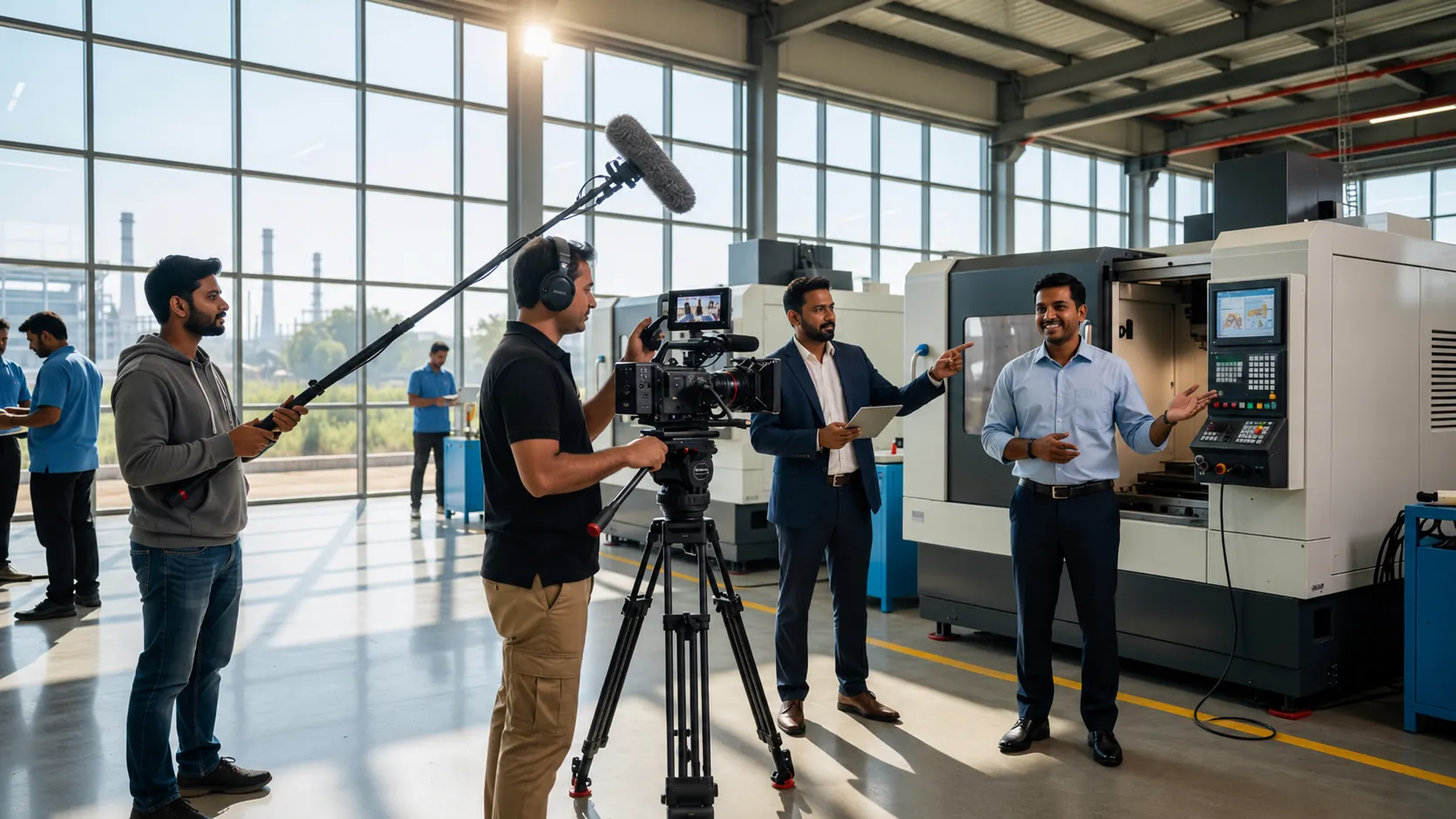
- CNC machining and automation
- Assembly processes
- Quality inspections
- Research and development
- Packaging and logistics
- Safety practices
- Infrastructure
This helps buyers understand not only what you manufacture but also the scale and sophistication of your operations.
3. Simplifies Complex Manufacturing Processes
Industrial products and manufacturing systems are often highly technical. Corporate films make these concepts easier to understand by combining visuals, animations, expert interviews, and real-world demonstrations.
Instead of overwhelming prospects with technical specifications, you can visually explain:
- How products are manufactured
- Quality assurance procedures
- Industry certifications
- Testing methods
- Production workflows
This improves buyer confidence and reduces confusion during the sales process.
4. Strengthens B2B Video Marketing
Corporate films are versatile marketing assets that can be repurposed across multiple platforms:
- Company website
- YouTube
- Sales presentations
- Trade exhibitions
- Investor meetings
- Recruitment campaigns
- WhatsApp business communications
- Email marketing
This maximizes return on investment by allowing one production to support multiple business objectives.
5. Creates a Competitive Advantage
Many manufacturers still rely on static websites and PDF brochures. A professionally produced corporate film helps your business stand out by offering a richer, more engaging experience.
Community discussions among B2B marketers and manufacturing professionals consistently highlight that factory walkthroughs, customer testimonials, and process videos are among the most effective ways to build trust and generate qualified inquiries in industrial markets.
How Corporate Films Generate Qualified B2B Leads
Generating B2B leads in the manufacturing industry is very different from selling consumer products. Manufacturing companies often deal with longer sales cycles, multiple decision-makers, technical evaluations, factory audits, and high-value transactions. Before contacting your sales team, potential buyers want to understand your capabilities, production quality, certifications, infrastructure, and reliability.
A professionally produced corporate film bridges this gap by allowing potential customers to experience your business before they ever step inside your facility. Instead of relying only on brochures or presentations, you can visually demonstrate your expertise, manufacturing process, quality standards, and company culture. This helps establish confidence much earlier in the buying journey.
Build Trust Before the First Sales Meeting
Trust is one of the biggest deciding factors in B2B manufacturing. Buyers want to know whether your company can consistently deliver quality products, meet production timelines, and maintain high standards.
A corporate film gives them a transparent look inside your organization by showcasing:
- Modern manufacturing facilities
- Production processes
- Quality control procedures
- Skilled workforce
- Leadership team
- Safety standards
- Customer-focused operations
When buyers see your factory in action, they gain confidence that your company has the expertise and infrastructure needed to handle their requirements.
Showcase Your Manufacturing Capabilities
Most manufacturing companies invest significantly in advanced machinery, automation, and quality systems, but many struggle to communicate these strengths effectively.
Corporate films visually demonstrate:
- CNC machining
- Robotic automation
- Production lines
- Assembly operations
- Testing laboratories
- Packaging facilities
- Warehouse management
- Logistics operations
Instead of describing your capabilities in text, you show them in action. This makes it easier for procurement teams, engineers, and business owners to understand what makes your company different from competitors.
Simplify Complex Manufacturing Processes
Industrial products and manufacturing systems often involve technical concepts that are difficult to explain through brochures or presentations.
Corporate films simplify complex information using:
- Factory demonstrations
- Process visuals
- Motion graphics
- Leadership interviews
- Product demonstrations
- Quality inspection footage
This approach helps technical and non-technical stakeholders understand your products quickly while reducing confusion during the buying process.
Improve Website Conversion Rates
Your website is often the first interaction a prospective customer has with your business. A professionally produced corporate film keeps visitors engaged for longer, increases credibility, and encourages them to take action.
Whether your goal is to generate enquiries, request quotations, schedule factory visits, or book meetings, video content helps reduce uncertainty by providing visual proof of your expertise.
Strengthen LinkedIn and B2B Video Marketing
LinkedIn has become one of the most important platforms for B2B marketing. Manufacturing companies that consistently publish professional video content often receive higher engagement than those sharing only static images or text posts.
A single corporate film can be repurposed into multiple pieces of content, including:
- Leadership videos
- Factory walkthroughs
- Product highlights
- Customer success stories
- Behind-the-scenes clips
- Recruitment videos
- Short educational reels
- Trade exhibition presentations
This allows businesses to maximize the return on a single production investment.
Support Export and International Sales
For exporters, one of the biggest challenges is building trust with buyers who cannot physically visit the manufacturing facility.
A professionally produced corporate film acts as a virtual factory tour by showcasing:
- Manufacturing infrastructure
- Production capacity
- International quality standards
- Export packaging
- Warehouse operations
- Certifications
- Experienced workforce
This transparency helps overseas buyers evaluate your company with greater confidence before initiating discussions.
Corporate Documentary vs Company Profile Video
| Feature | Corporate Documentary | Company Profile Video |
| Primary Goal | Build trust through storytelling | Introduce the business and its services |
| Main Focus | People, culture, values, company journey | Products, services, infrastructure, capabilities |
| Storytelling | High | Moderate |
| Emotional Connection | Strong | Limited |
| Leadership Interviews | Essential | Optional |
| Employee Stories | Frequently included | Minimal |
| Factory Footage | Supports the narrative | Highlights facilities |
| Best For | Brand trust, recruitment, investors, exporters | Sales presentations, website, exhibitions |
| Marketing Value | Long-term brand authority | Lead generation and company introduction |
| Content Lifespan | Evergreen | Updated as business evolves |
Which One Should Manufacturers Choose?
The answer depends on your business objectives.
If your goal is to introduce your company, products, services, and manufacturing capabilities to potential customers, a Company Profile Video is the ideal choice.
If your objective is to build long-term trust, strengthen your brand reputation, attract investors, improve recruitment, or create an emotional connection with your audience, a Corporate Documentary delivers greater value through authentic storytelling.
Many successful manufacturers use both formats together. A company profile video creates awareness, while a corporate documentary builds credibility and long-term brand value.
Types of Corporate Films Every Manufacturer Should Invest In
Company Profile Video
A concise overview of your business, manufacturing capabilities, products, infrastructure, certifications, and services. It is ideal for websites, sales meetings, trade shows, and investor presentations.
Corporate Documentary
A story-driven film that highlights your company’s vision, leadership, employees, values, achievements, and commitment to quality. It helps build trust and strengthens your overall brand identity.
Factory Tour Video
A professionally produced walkthrough of your manufacturing facility that showcases production lines, machinery, quality control processes, warehouse operations, and infrastructure.
Product Demonstration Video
Explain how your products work, highlight key features, demonstrate applications, and help buyers better understand your solutions.
Customer Testimonial Video
Feature real customers sharing their experiences, success stories, and satisfaction with your products or services. Authentic testimonials build trust faster than written reviews.
Drone Factory Film
Capture stunning aerial footage of your manufacturing plant, warehouses, office premises, and logistics operations to demonstrate the scale and professionalism of your business.
Recruitment Video
Showcase your workplace culture, employee development, leadership, and career opportunities to attract talented professionals.
Safety and Training Video
Create professional internal videos to educate employees on safety procedures, operational guidelines, and workplace standards while maintaining consistency across teams.
How Production Works
Discovery & Research
This phase ensures the project is aligned with business goals and produces clear, engaging visual communication.
Story Development
This phase ensures the project is aligned with business goals and produces clear, engaging visual communication.
Pre‑Production Planning
This phase ensures the project is aligned with business goals and produces clear, engaging visual communication.
Filming & Interviews
This phase ensures the project is aligned with business goals and produces clear, engaging visual communication.
Editing & Post‑Production
This phase ensures the project is aligned with business goals and produces clear, engaging visual communication.
Distribution Strategy
This phase ensures the project is aligned with business goals and produces clear, engaging visual communication.
Industry Applications
Manufacturing
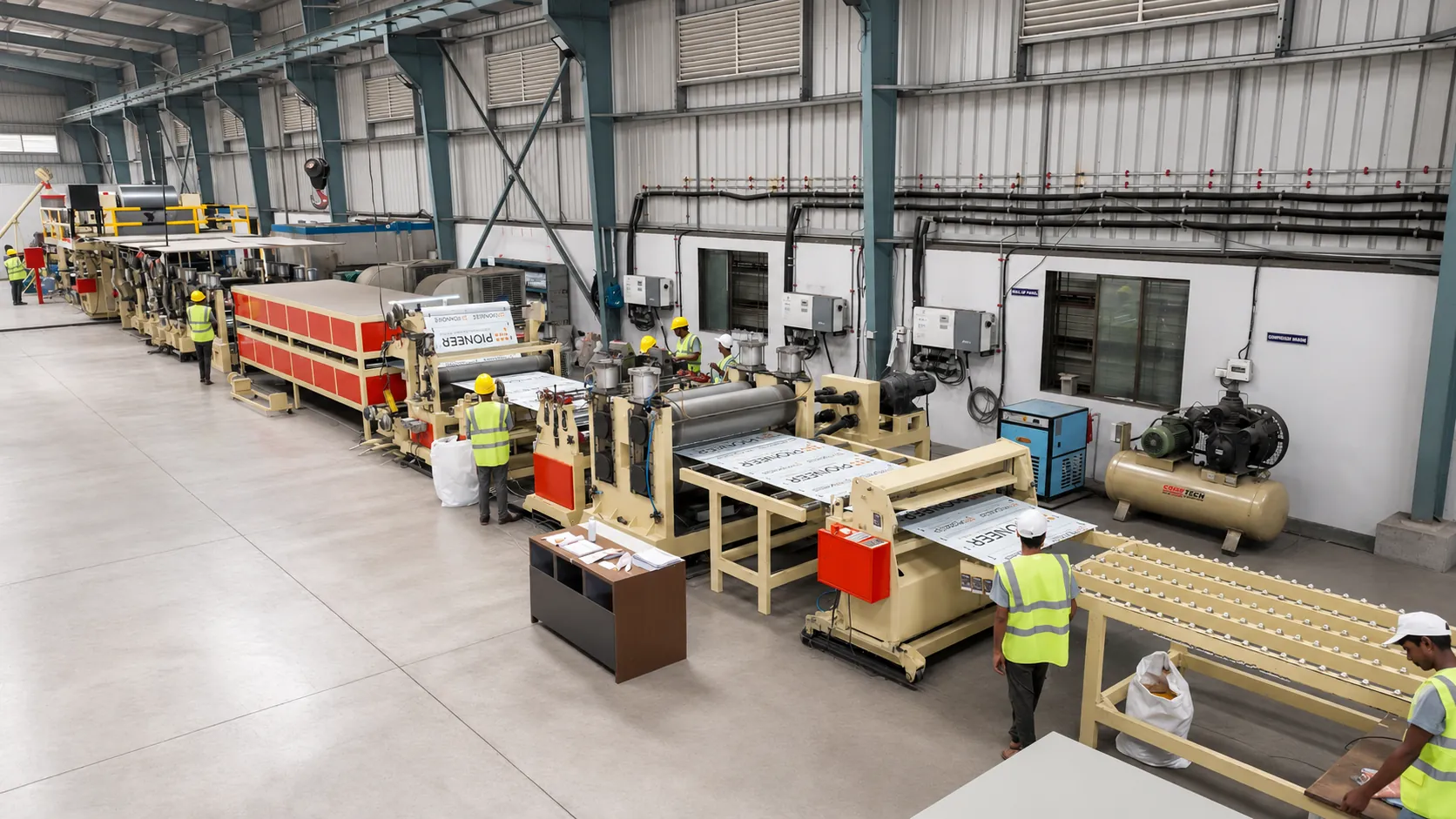
Show factory operations, quality control, automation, and production capacity.
Pharmaceutical
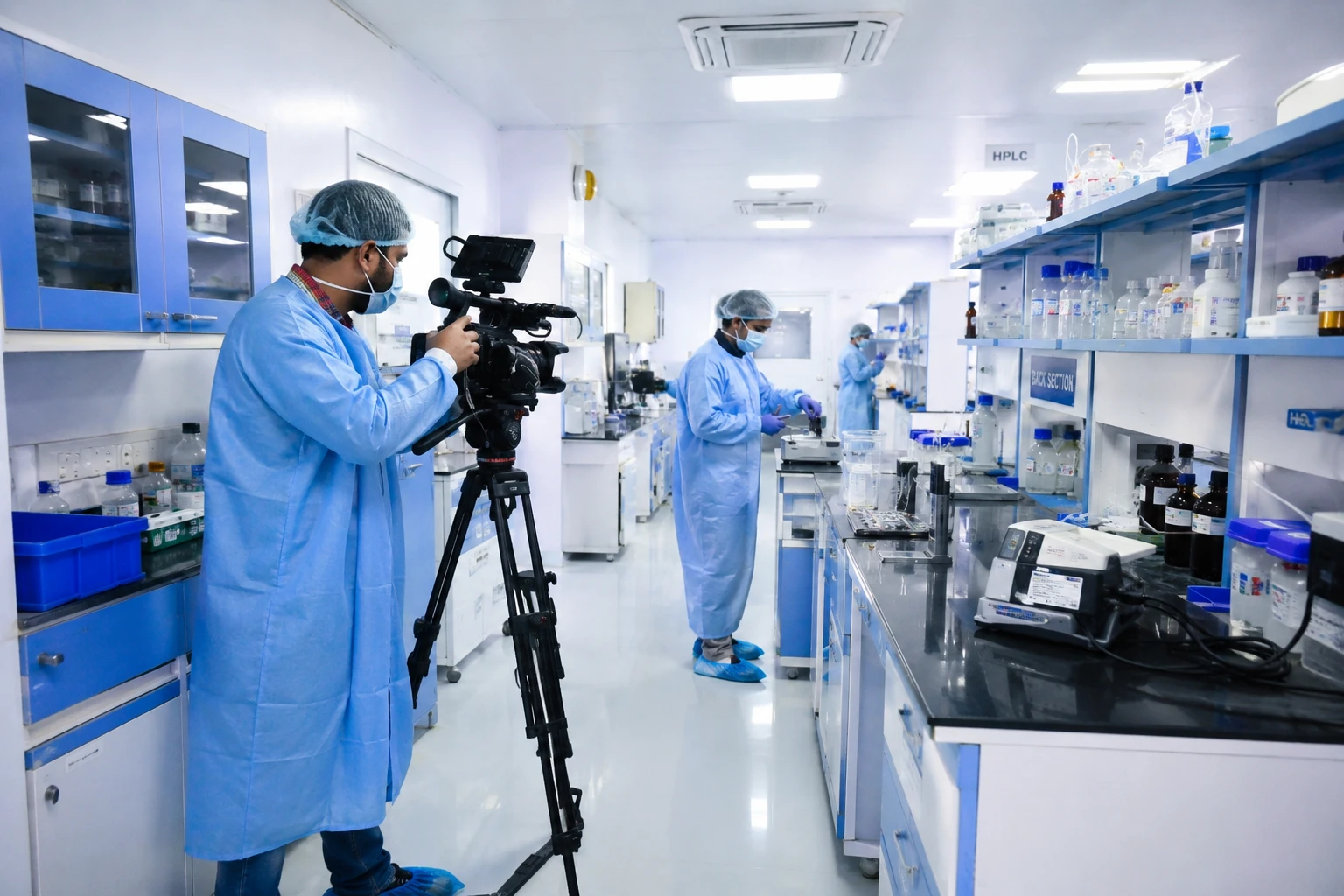
Highlight GMP practices, cleanrooms, compliance, and precision.
Engineering
Explain technical expertise with visuals and expert interviews.
Industrial
Demonstrate processes, machinery, and infrastructure.
Exporters
Build confidence among overseas buyers with transparent factory visuals.
B2B Brands
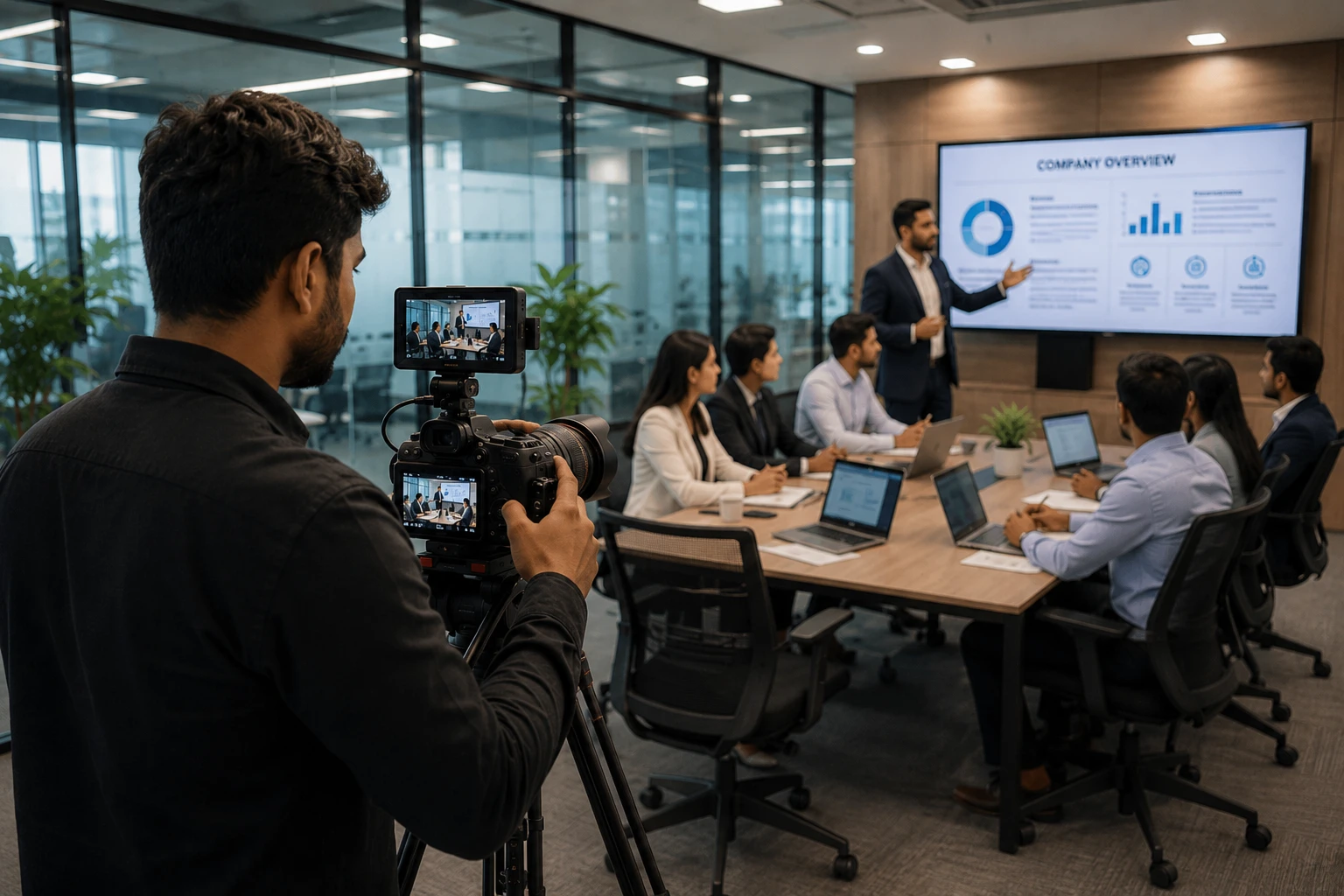
Strengthen credibility for websites, LinkedIn, and sales presentations.
Best Practices
- Use authentic storytelling
- Feature real employees
- Include leadership perspectives
- Invest in professional production
- Define clear objectives
- Repurpose long-form content into short clips
Expert Tips
- Keep the main film between 3–7 minutes.
- Create 30–60 second social media edits.
- Always include subtitles.
- Use drone footage to show facility scale.
- Capture genuine moments instead of scripted scenes.
FAQs
A company profile video introduces the business, while a corporate documentary tells its story and builds emotional trust.
Most manufacturers benefit from both: a profile video for sales and a documentary for branding.
Company profile videos are usually 2–5 minutes, while documentaries are often 5–10 minutes depending on the story.
Websites, LinkedIn, YouTube, trade shows, investor meetings, recruitment, and presentations.
Yes. A single production can generate a main film plus multiple short videos, testimonials, reels, and photography.
Key Takeaways
Choose a company profile video to introduce your business.
Choose a corporate documentary to build trust.
Both formats complement each other.
Professional production improves credibility.
Repurpose content to maximize ROI.
Conclusion
Both company profile videos and corporate documentaries play an important role in modern B2B marketing. The right choice depends on your objectives, audience, and long-term strategy. Combining both formats creates a powerful visual communication system that supports branding, marketing, recruitment, and sales.
Call to Action
Ready to showcase your business with powerful visual storytelling?
Global Factory Films specializes in corporate documentaries, company profile videos, industrial films, drone cinematography, and professional photography for manufacturing, pharmaceutical, engineering, and B2B businesses.
Website: https://www.globalfactoryfilms.com/
Email: Globalfactoryfilms@gmail.com
Phone: +91 78747 39292